From Pufferfish to Empowering the Wives of Fishermen in Eretan Kulon
In Eretan Kulon Village, Indramayu, we met Kak Rosyidah, affectionately known as Kak Ros, a womenpreneur who has long had an entrepreneurial spirit...
Eretan Kulon Village, Kandanghaur District, Indramayu
In Eretan Kulon Village, Indramayu, we met Kak Rosyidah, affectionately known as Kak Ros, a womenpreneur who has long had an entrepreneurial spirit and a strong interest in developing the potential of seafood resources found around her community.
Kak Ros’s journey began with her mother.
At the time, Kak Ros and her mother noticed something interesting among the catches at the Fish Auction Center (TPI) in Eretan Kulon: pufferfish.
Pufferfish are known to contain toxic parts of their bodies and therefore require proper handling and processing. For some people, this makes pufferfish seem like a difficult catch to utilize.
For Kak Ros and her mother, however, this was precisely where the challenge—and opportunity—lay: finding the right way to process it.
They began exploring traditional processing methods to remove the toxins from pufferfish so that they could be safely utilized. This effort became one of the starting points of their journey to add value to the seafood resources available in their area.
Through their innovation and efforts, Kak Ros and her mother eventually received an award from Pertamina for their contribution to increasing the value of local seafood resources.
For us, this story is interesting not only because of the products they have created, but also because of the rather uncommon perspective behind them.
The journey did not stop with pufferfish.
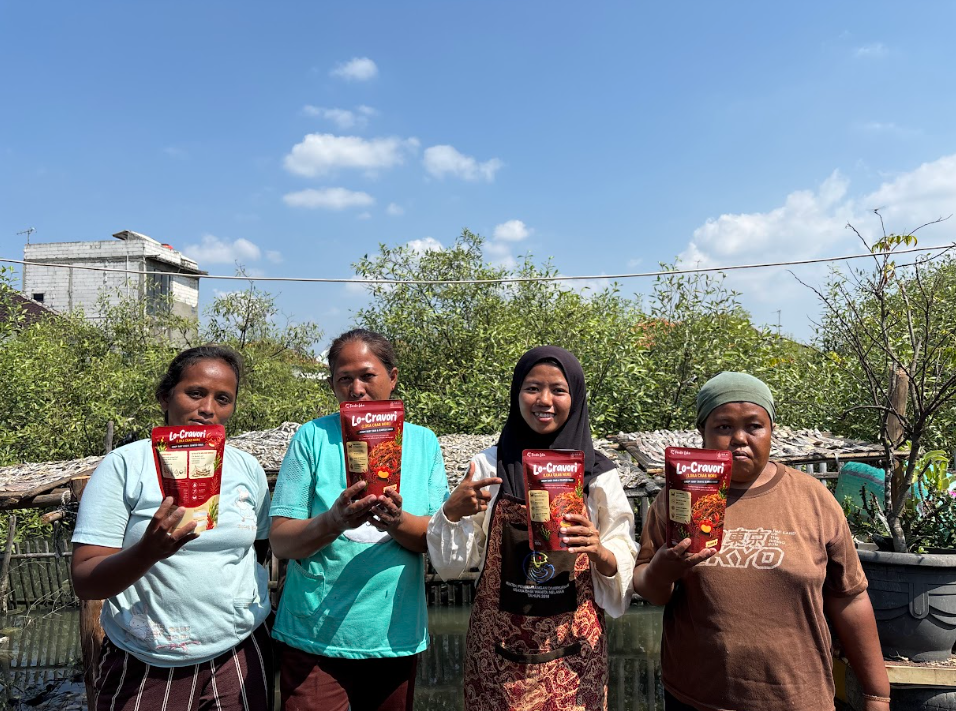
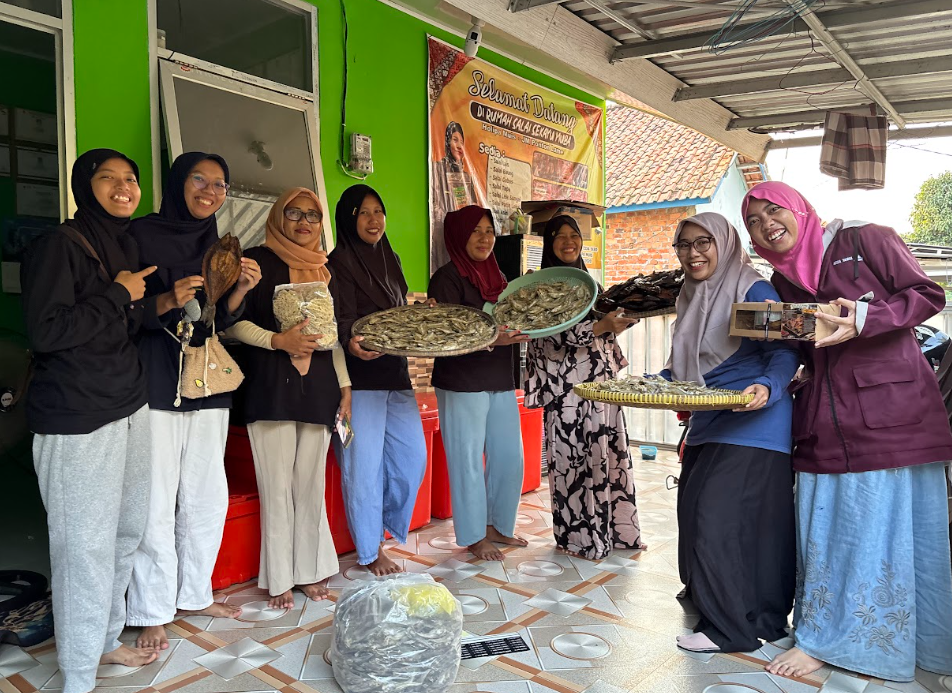
Today, Kak Ros continues to develop various seafood products from the coastal area of Eretan Kulon, ranging from pufferfish skin crackers and baby crab products to various fresh seafood products.
What is available around them is transformed into products with greater economic value.
For us, this is one tangible example of how food innovation does not always have to begin with something entirely new.
Sometimes, innovation begins by taking another look at what is already available around us.
Fish catches are not simply food ingredients. When properly processed and given access to the right markets, they can become an additional source of income for families and create new economic opportunities within coastal communities.
Growing the Business Together with Fishermen’s Wives
What makes Kak Ros’s journey even more interesting is how the growth of her business has gradually involved women from the surrounding community.
Today, Kak Ros actively employs more than five fishermen’s wives to support the production process.
Together, they carry out various activities, from cleaning raw materials and processing them to turning seafood into products ready to be marketed.
In this way, the value of fishermen’s catches does not stop at the moment the fish is sold.
Value and opportunity continue to move throughout the food chain.
And within that process, women have the opportunity to contribute directly.
More Than Just a Product
Kak Ros’s story reminds us that building a more sustainable food system does not always have to begin on a large scale.
Sometimes, change begins with someone who sees potential in the environment closest to them.
With a mother and daughter working together to find a way to utilize pufferfish.
With fishermen’s catches being transformed into higher-value products.
With five women in the community being given an opportunity to work.
Foodie Loka Indonesia believes this is an important part of building a better food system.
We do not only want to understand what local foods are still being consumed, but also who is behind those foods, how they are produced, and how their economic value can return to the communities that are part of the chain.
Every place holds a story that hasn’t been fully told yet.
Explore more stories