Behind the Smoke: Salai Fish from the Musi River
Kalau berkunjung ke Musi Banyuasin, Sungai Musi bukan hanya bagian dari lanskap...
Musi Banyuasin, Sumatera Selatan
When visiting Musi Banyuasin, the Musi River is more than just part of the landscape.
For many people here, the river is a place to catch fish, a source of livelihood, and an integral part of everyday life.
This is where our journey begins.
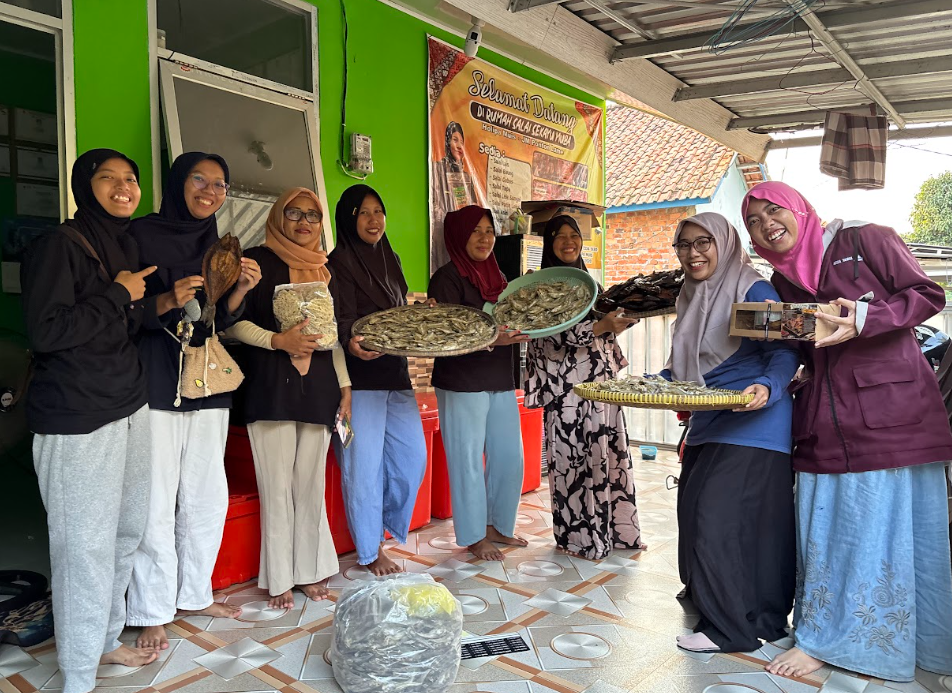
We met Bu Holifah Muis, an MSME pioneer who, together with her team at Rumah Salai Sekayu Muba, processes catches from the Musi River in Musi Banyuasin into traditional salai smoked fish.
From Fresh Fish to Salai Smoked Fish
Fish such as lais, baung, river catfish, river-dwelling lele, seluang, and various other local species are sourced from local fishermen and brought in for processing.
One of the most interesting stages begins when the fish are prepared for smoking.
Each fish is carefully split open.
Their sizes and shapes are not always the same. And as it turns out, preparing these small fish is not a task that can be done casually. It requires precision, speed, and skills developed through years of experience. Bu Holifah patiently trains her team through the process.
The fish then undergo traditional smoking for up to one to two days, transforming them into salai smoked fish. The process extends their shelf life and allows the catch to reach consumers in a different form from its fresh state.
At this point, we began to see that it is not only the form of the fish that changes.
Expanding the ways in which it can be processed also increases its value.
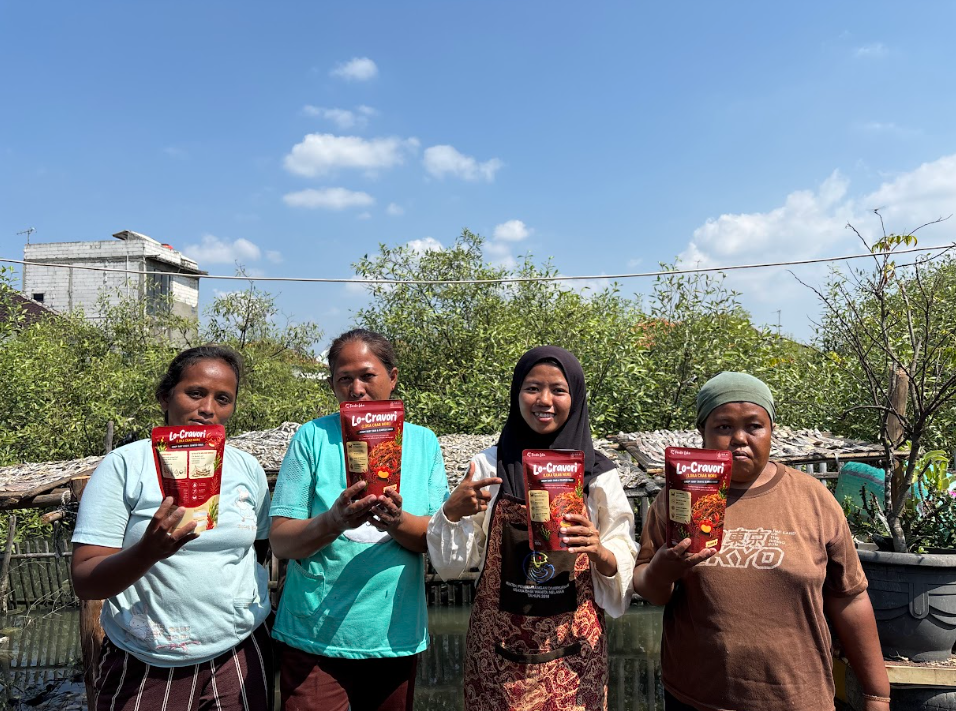
Behind this process is a group of women who are actively involved in the work.
Before joining this activity, some of them had no additional source of income and still relied primarily on their husbands' earnings.
Today, they have work that they can do together while contributing additional income to their families.
Some clean the fish.
Some split them open.
Some handle the processing.
Others manage the smoking process.
The tasks may appear simple, but seeing the final product makes it clear that they require considerable skill.
And the longer we stayed there, the more we realized that salai is more than just a product.
It is a chain of work connecting Musi River fishermen, processors, MSMEs, families, and eventually consumers.
One Fish, Many People Behind It
The journey of a fish from the Musi River is longer than it first appears.
It begins with fishermen catching the fish.
The catch is then collected and brought to processors.
In the hands of Bu Holifah and her team, the fish takes on a new form and a longer shelf life.
The product then continues its journey toward consumers.
This simple chain reveals one important thing:
when local food has access to a market, more people can benefit from its existence.
But when market access is limited, much of that potential can remain confined to local markets, with limited room for growth.
This led us to ask: Where could this salai fish go next?
During our journey in Musi Banyuasin, we also spoke with the Musi Banyuasin Regency Fisheries Office.
We discovered that Bu Holifah is not the only one.
There are more than 90 local MSMEs involved in fisheries processing in the region.
This means the question is not whether the region has local food resources.
It has plenty.
The challenge is how these products can grow, reach higher standards, and find wider markets.
How can local products achieve consistent quality?
How can their packaging be strengthened?
How can market access be expanded?
And how can these products become part of the region's food identity—perhaps even becoming one of the local souvenirs visitors to South Sumatra seek out, alongside pempek?
Perhaps what needs to be built is not only the product itself.
It is the ecosystem around it.
Because Bu Holifah and other local MSME producers have already started with what they have.
They have fish.
They have knowledge.
They have skills.
They have networks with fishermen.
What they need next are more connections to help all that potential move further.
From fishermen to processors.
From processors to markets.
From markets to consumers.
And ultimately, back to the communities who have kept this food chain alive from the beginning.
Every place holds a story that hasn’t been fully told yet.
Explore more stories